Our team consists of experienced and motivated engineers, who all hold PhDs, with background in physics or chemistry of the atmosphere and astrophysics.
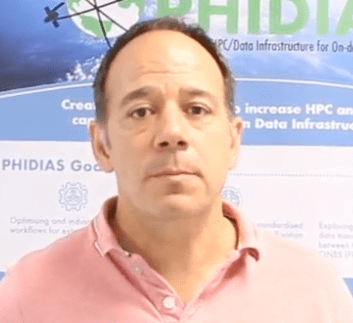
Pascal Prunet
Pascal holds a Master’s Degree in Physics and External Geophysics and a Ph.D. in Geophysical Sciences with a thesis focused on oceanic carbon cycle. During his postDoc he specialised in atmosphere sounding from space for chemistry and climate. Atmospheric radiative transfer modelling and spectroscopy are two of Pascal’s domains of expertise. Beside being Spascia’s CEO, Pascal delivers on several projects including the preparation of the future MicroCarb mission with CNES, the evaluation of the added-value and limitations of present and future satellite instruments (IASI, IASI-NG, IRS) for air quality monitoring.

Anne Boynard
Anne holds a M.Sc. in Ocean, Atmosphere, Climate and Remote Sensing (2006) and a PhD in Environment Sciences (2009). She performed a post-doc at NCAR (Boulder, USA) for 3 years, which was focused on the study of air quality using both satellite data and modeling. She is passionate about satellite observation analysis and interpretation for the monitoring of the atmospheric composition and its evolution, under the influence of human activities. She is involved in several projects including the assessment of the benefits and limitations of current and future satellite instruments (IASI, IASI-NG, IRS) for air quality monitoring, the validation and improvement of the IASI ozone retrievals as well as the study of the Asian monsoon impact on atmospheric chemistry and climate. She also contributes to provide scientists with easy, free and open access to IASI atmospheric composition data along with quick looks via the IASI/AERIS website (iasi.aeris-data.fr).
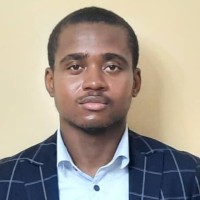
Yannick Kangah
Yannick studied Meteorology and Atmospheric Sciences in Casablanca (Morocco) and Toulouse (France). Convinced of the growing importance of spaceborne measurements for on the one hand improving meteorological forecast and on the other hand monitoring pollution, he completed his training with a Ph.D. in that field in 2017. At the moment, Yannick collaborates with the French Space Agency (CNES) on monitoring and improving the performances of IASI, one of the reference spaceborne instruments in atmospheric sciences.
Andrzej Klonecki
Andrzej holds a bachelor degree in chemistry and a Ph.D. in Atmospheric and Oceanic Sciences. His thesis and post-doctoral work focused on modelling tropospheric chemistry with global chemistry transport models. Since, he continued using chemistry transport models at various spatial scales, going from regional to local, in the framework of studies preparing and specifying future Earth observation missions. Andrzej’s interest is the development of methods that rely on space-based observations to provide information on anthropogenic emissions, such as CO2 emissions from power plants. He also works on the development of new methodologies for the retrieval of geophysical products from space measured radiances and on using historical satellite observations (pre-1979) to provide additional valuable information to constrain past climate.

Olivier Lezeaux
Olivier holds a M.Sc. in Physics (1994) and a Ph.D. in GeoPhysic Sciences (1999). Olivier is specialised in atmospheric remote sounding from space for the purpose of monitoring Earth’s atmosphere, e.g. climate change, air quality, meteorology. His expertise include infrared spectroscopy, atmospheric radiative transfer, atmospheric modelling, inverse techniques, and classification methods. Olivier’s current work is twofold. On the one hand he exploits S5P’s data in order to characterise emission sources. On the other hand he collaborates at the preparation of spatial missions (MicroCarb, GeoCarb) in order to estimate Human emissions of green-house gases (carbon dioxide, methane) and pollutants (nitrogen dioxide, carbon monoxide, ozone).
Nicolas Nesme
Nicolas holds 2 M.Sc. in Astrophysics, and a Ph.D. under the joint supervision of SPASCIA and ONERA. Nicolas’s research consists in improving methane emissions detection by leveraging airborne and satellite images produced by methane sensitive instruments. Methane is a greenhouse gas that is a recognised threat for life on Earth; in other words, improving methane detection and quantification can limit public health risks. During his Ph.D., Nicolas was able to process a complete image processing chain, starting by recovering the hyperspectral image, then pre-processing the luminance spectra (L1). The extraction of the methane concentration (L2) is made possible by extracting the spectral signature of methane in the spectra. In order to do so, an estimation of the source flow (L4) was developed during the thesis.
Sarah Pipien
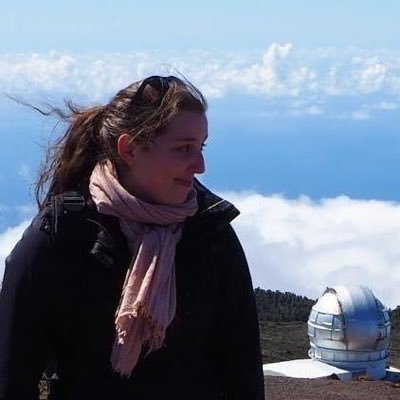
Sarah holds a M.Sc. in Cosmos, fields and particles and a Ph.D. in Astrophysics and Cosmology. During her Ph.D. and postDoc, she specialised in image processing through the analysis of large astronomical data sets. Believing in the importance of environmental monitoring, Sarah shifted her focus from space observations from Earth, to Earth observations from space. In this new domain, she gathered first hand experience on instruments as an electrical engineer on the assembly, integration and testing of optical instruments onboard satellites dedicated to Earth observations (Thales Alenia Space). Her current work at SPASCIA focuses on developing processing schemes for identifying extreme atmospheric events such as wildfires, volcanic events or pollution episodes, by PCA on IASI measurements (CNES) and on S5P-TROPOMI data (PHIDIAS). She is working on the development of algorithms for the joint retrieval from IASI and S5P-TROPOMI to investigate the added value of combining SWIR and TIR measurements for CH4 retrievals from satellites.

Marie Bouillon
Marie holds a M.Sc. in Remote Sensing and a Ph.D. in Atmospheric Sciences. Her thesis focused on the retrieval of atmospheric temperatures from IASI observations using an artificial neural network, and the validation with other datasets. She then studied short and long-term temperature evolution using this new dataset. She now works on the monitoring of IASI performance, together with the CNES.
Claude Camy-Peyret
Claude is a scientific consultant for SpasciA (contributing part time). He is also an emeritus scientist at Institut Pierre-Simon Laplace (IPSL) and a retired research director from the French National Centre for Scientific Research (CNRS). He is a specialist of high-resolution molecular spectroscopy and has been involved in experimental and theoretical studies of vibration-rotation spectra of atmospheric molecules for many years. His work on energy levels, line positions, intensities and widths of H2O and O3 (and other asymmetric rotors) has contributed to the improvement of the spectroscopic databases (HITRAN, GEISA,…). In the last three decades, Claude has also been involved directly in the measurement of atmospheric trace species using balloon and space instruments as well as in the validation of radiative transfer algorithms. He has been involved in several satellite validation campaigns (ILAS, Envisat, ODIN) using both balloon and ground based spectroscopic instruments or radio-sondes (AIRS, IASI). He has been director of the Laboratory for Molecular Physics and Application (LPMA) from 1996 to 2008 located on the Jussieu campus of UPMC (now Sorbonne-Université). His current interests are in satellite remote sensing of the Earth atmosphere. With SPASCIA colleagues, he is involved in several research projects including IASI, IASI-NG, GOSAT, S5P, MTG-IRS, FORUM, MicroCarb and Nitrosat.
Thomas Hall
Thomas holds an M.Sc. in Climate Change and a Ph.D. in Atmosphere, Oceans and Climate. His thesis assessed the use of early satellite data from the IRIS instrument to test historical reconstructions of sea surface temperature (SST). Since then, he has worked on a C3S satellite data rescue project, first at the University of Reading (UK) and now at SPASCIA, aiming to recover, assess and prepare a selection of early (mainly pre-1979) satellite data records to improve future climate reanalyses.
 Spascia